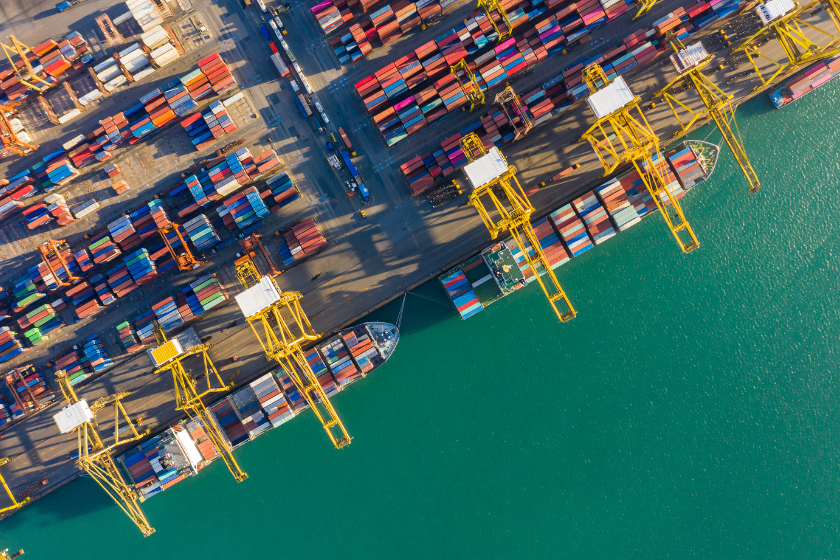
Introduction to Shipping Decarbonization
Shipping decarbonization has moved from distant climate ambition to a real test of business strategy, global cooperation, supply chain responsibility, and climate credibility.
For many years, companies treated maritime emissions as a difficult technical challenge. They acknowledged the issue, but often postponed serious action. That approach is becoming harder to defend.
The shipping sector carries the backbone of global trade. Yet it also contributes roughly 2% to 3% of global greenhouse gas emissions. This means that global trade cannot claim to be future-ready while ignoring the climate footprint of the vessels that move products across the world.
Recent developments show that the sector has entered a more practical stage. Maersk completed its first vessel voyage powered entirely by ethanol in the first quarter of 2026, presenting the trial as a successful step toward expanding low-emission fuel options for its dual-fuel fleet.
In my opinion, this is not just another shipping milestone. It is a warning to every sustainability leader, investor, exporter, importer, and logistics executive. Shipping decarbonization will not happen through one perfect fuel or one elegant policy. It will require a portfolio of cleaner fuels, efficiency improvements, regulation, credible emissions accounting, and much stronger cooperation between carriers and cargo owners.
For ESG professionals, the message is clear: shipping now affects climate credibility as much as logistics performance.
Benefits of Shipping Decarbonization
The first benefit of shipping decarbonization is clear: lower emissions from one of the world’s most important transport systems. However, the business case goes much further.
Many companies depend on global logistics networks that create significant Scope 3 emissions. Ocean freight may sit outside a company’s direct operations, but it still affects the credibility of its climate strategy.
When investors, regulators, and customers evaluate net-zero plans, they increasingly look beyond direct emissions. They want to know whether companies address emissions across the full value chain, including transport and logistics.
This is why shipping decarbonization matters for ESG performance. A company may have strong renewable energy targets for its offices or factories. Yet if it ignores emissions from global freight, its climate plan may look incomplete.
The DHL and Hapag-Lloyd agreement shows how the market is starting to respond. The three-year agreement aims to support Scope 3 emissions reductions through sustainable marine fuels and a book-and-claim mechanism. ESG Today reported that the first order, executed in July 2025, achieved 25,000 tons of CO2e emissions reductions.
This kind of collaboration matters. No single company can decarbonize shipping alone. Cargo owners, shipping lines, fuel producers, ports, regulators, and investors all need to move in the same direction.
Practical Steps and Best Practices
The rise of alternative marine fuels is one of the most important developments in shipping decarbonization. Shipping companies and logistics providers are testing several options, including methanol, ethanol, biofuels, biodiesel, ammonia, and other low-emission pathways.
Maersk’s ethanol-powered voyage is important because it shows that the industry is still testing multiple routes. Waiting for one dominant fuel may slow progress. Instead, companies need to support credible solutions while the market develops.
However, sustainable fuels are not automatically risk-free. Ethanol may help reduce marine emissions, but it can also raise questions around feedstock sourcing, land-use pressure, regional supply concentration, and lifecycle emissions. The United States and Brazil currently account for around 80% of global ethanol output, while wider ethanol use in shipping could create supply chain and environmental concerns.
This is where ESG due diligence becomes essential. Companies should not look only at the fuel label. They should examine the full sustainability profile behind it.
Common Mistakes to Avoid
One common mistake is assuming that all sustainable fuel claims are equal. They are not. The real climate impact of a fuel depends on feedstock, production method, transport, lifecycle emissions, and verification.
Another mistake is treating book-and-claim systems as a shortcut. These systems can help accelerate early adoption because sustainable marine fuels remain limited in global supply. They allow companies to support cleaner fuel use even when that fuel is not physically used on their exact shipment.
However, transparency is essential. Without clear documentation, third-party verification, and credible chain-of-custody rules, book-and-claim systems may create confusion. They may also expose companies to accusations of greenwashing.
A credible claim should answer simple but serious questions. What fuel was used? Where was it used? How were emissions reductions calculated? Was the claim independently verified? Was the same reduction claimed by more than one company?
These questions are not technical details. They are the foundation of trust.
Regulation Is Raising the Stakes
Shipping decarbonization is also moving from voluntary ambition to regulatory pressure.
The International Maritime Organization’s Net-Zero Framework is expected to introduce a mandatory fuel standard and greenhouse gas emissions pricing system for certain large ships. ESG Today reported that the measures will apply to large ocean-going ships over 5,000 gross tonnage, which represent 85% of total CO2 emissions from international shipping.
This is a major shift. The framework also combines mandatory emissions limits and greenhouse gas pricing across an entire industry sector.
For businesses, this means shipping emissions could become more directly connected to cost, procurement, supplier selection, and climate reporting. Companies that prepare early may manage future compliance costs more effectively. They may also respond faster to customer expectations.
This is especially important because the agreement moved forward despite political tensions, including the U.S. walking out of negotiations. In my view, this shows that shipping climate regulation may continue even when political consensus weakens. Companies should not build their decarbonization strategy around short-term political signals.
What Companies Should Do Now
Companies that depend on ocean freight should not wait for the market to become perfect. They can take practical steps today.
First, they should map shipping emissions exposure. Businesses need to identify which routes, carriers, products, suppliers, and regions create the largest transport-related emissions. Without a clear baseline, no company can build a credible decarbonization plan.
Second, they should engage logistics partners directly. Procurement and sustainability teams should ask carriers about fuel options, emissions data, certification, chain of custody, and third-party verification. Low-carbon shipping claims must rely on reliable data, not marketing language.
Third, they should integrate shipping into ESG reporting. If maritime transport is material to a company’s footprint, it should appear in transition plans, supplier engagement strategies, and sustainability disclosures.
Fourth, they should monitor policy and carbon pricing. Future fuel standards and greenhouse gas pricing could influence carrier selection, contract terms, and product-level emissions reporting.
Finally, companies should avoid overreliance on offsets. Offsets and book-and-claim systems can support early market development, but they should not replace operational change. Real emissions reductions must remain the priority.
Why This Matters for ESG Leadership
Shipping decarbonization is a practical example of how ESG is becoming more complex and strategic. It connects climate science, fuel technology, supply chain management, regulation, finance, and governance.
The companies that lead in this area will not necessarily be those that make the boldest claims. They will be those that build credible transition plans, test practical solutions, work with partners, and disclose progress honestly.
For global businesses, shipping has become part of climate strategy, customer trust, regulatory readiness, and long-term competitiveness, not just a cost center.
Companies that understand this early will be better prepared for the next stage of the low-carbon transition. Those that ignore it may discover too late that their supply chains have become their biggest ESG weakness.
FAQs
What is shipping decarbonization in simple terms?
Shipping decarbonization means reducing greenhouse gas emissions from ships. This can happen through cleaner fuels, more efficient vessels, better route planning, carbon pricing, and stronger cooperation across supply chains.
Why is shipping decarbonization important for ESG?
It is important because ocean freight can contribute to a company’s Scope 3 emissions. A credible ESG strategy should address not only direct emissions, but also emissions across the full value chain.
What are sustainable marine fuels?
Sustainable marine fuels are lower-emission alternatives to conventional fossil marine fuels. Examples may include methanol, ethanol, biofuels, biodiesel, ammonia, and other emerging options. Their real climate benefit depends on lifecycle emissions, feedstock sourcing, and verification.
What is book and claim in shipping?
Book and claim is an accounting mechanism that allows companies to support the use of sustainable fuels even when those fuels are not physically used on their exact shipment. It can help scale early markets, but it requires transparent documentation and credible verification.
Is sustainable shipping worth it for business growth?
Yes, especially for companies with global supply chains. Sustainable shipping can reduce climate risk, improve ESG reporting, support customer expectations, and help companies prepare for future regulation.








 English
  Greek
Greek