
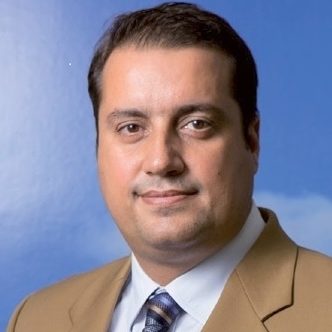
As the Center for Sustainability and Excellence (CSE) celebrates its 20th anniversary, founder and president Nikos Avlonas looks back on two decades of growth, innovation and international impact. In this exclusive interview, he highlights the milestones that shaped CSE’s global presence, the strategic choices that strengthened its resilience and the urgent challenges sustainability professionals face today. His insights show not only how far ESG has come, but also what the next decade of sustainable transformation will require. He shares these insights in a dedicated interview with DailyFax & Marketing Week, conducted by journalist Mrs. Rozaki, which follows below.
Q: What are the most important milestones of the last 20 years and the goals you want to achieve by the next big anniversary?
Nikos Avlonas:
If I had to summarize the most important milestones of CSE’s 20-year history in three points, I would mention the following:
-
Global recognition of our expertise, with collaborations with more than 150 organizations, including dozens of Fortune 500 companies and governments representing about 15% of global GDP.
-
The expansion of international education through the Sustainability Academy and the Certified Sustainability Practitioner Program, which has certified more than 10,000 professionals in over 90 countries. This has positioned us as one of the leading providers of certified ESG training worldwide.
-
The organization of major international summits, such as the first World Sustainability Leadership Forum at One World Trade Center in New York.
For the next decade, our goal is to strengthen our global footprint even further and contribute decisively to international standards and the transition to reliable, measurable ESG, using emerging technologies and AI.
Q: From “gamble” to “miracle of endurance”: That’s how you described CSE’s journey so far. What was the turning point? Or what was the “ingredient” that helped win the gamble?
Nikos Avlonas:
The critical turning point was the period from 2010 to 2015. Entering the US market, forming a strategic partnership with GRI and developing the Sustainability Academy platform allowed us to combine technical training, international recognition and real scale.
The “ingredient” that made the difference was consistency. We stayed committed even when ESG was not yet mainstream. We invested in international collaborations, developed tools, certifications and training programs, and focused on quality and measurable impact.
Our recognition in Silicon Valley in 2018 by the largest foundation in the US was a natural continuation of this effort. It confirmed that our innovation and leadership in sustainability were gaining global acknowledgment. Today, as we work with organizations representing 15% of global GDP and participate in multilateral dialogues on sustainability — including shipping, ESG ratings and sustainable finance — it is clear that our resilience has always rested on strong values, perseverance and an international perspective.
Q: At CSE’s anniversary event in Athens, you mentioned that over the past 20 years you have made 495 trips around the world for the Center. How would we offset these based on carbon offsetting?
Nikos Avlonas:
These 495 trips reflect the international scale of our work, but they also create an obligation for honest and transparent reporting. Since 2011, we have implemented a carbon offsetting program for all our travel. In 2009, we published our first Sustainability Report and have continued to do so every two years.
Transparency matters to me personally. When we talk about decarbonization, we must follow the same principles we recommend to the executives and organizations we train.
Q: In conclusion, can we reverse the damage that has already been done? Or are we racing against time?
Nikos Avlonas:
Time is certainly pressing, but it has not run out. Science shows that a window of opportunity still exists, if we act seriously and consistently. What we need immediately is more resilient infrastructure. In our country alone, climate resilience will require investments equal to 5% of GDP.
What is needed now is coordinated action. Whether we refer to businesses, governments or civil society, we all share responsibility. The progress of recent years, from investment in clean energy to the rapid rise of ESG practices and stronger international standards, shows that progress is possible.
Still, the pace must increase. Soon, we may reach a point where reversing the damage is no longer feasible. The real question is not whether we will make it in time, but whether we will choose to act in time. At this moment, the role of sustainability professionals, institutions and businesses is more critical than ever.
Full Interview here






 English
  Greek
Greek