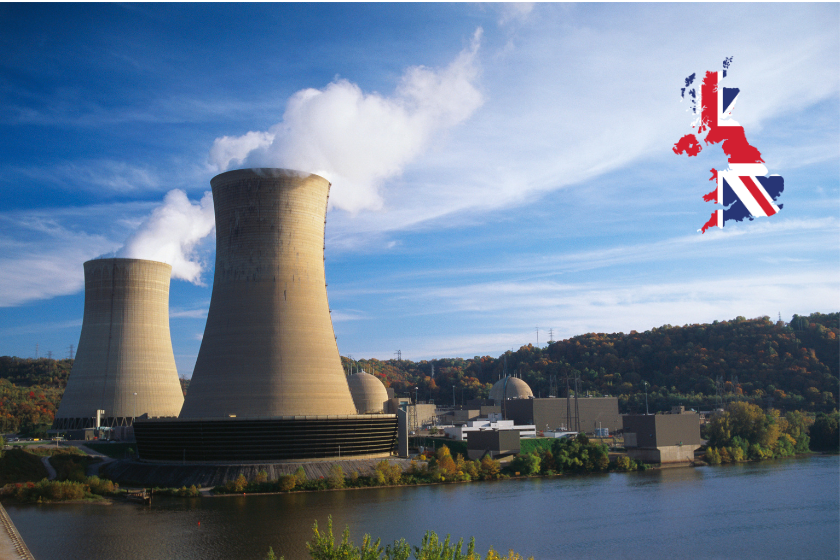
Introduction to UK Energy Security Clean Energy
In my view, the UK’s latest energy decisions deserve attention far beyond Britain. They show that clean energy has moved into a new strategic category. It now sits at the intersection of economic resilience, industrial competitiveness, and national security, not only climate policy. The tone of recent policy announcements makes that shift very clear, especially in the government’s Clean Power 2030 Action Plan and in recent coverage from ESG News on the UK’s push to shield the economy from global gas price shocks.
Three recent developments tell the story. First, the UK has doubled down on clean power as a response to energy insecurity and price volatility. Second, the government has confirmed it will remove Carbon Price Support from April 2028, arguing that the policy has largely achieved its original goal after coal’s exit from the system, a move covered by ESG News here and reflected in the official UK Parliament written statement on Carbon Price Support. Third, the UK has launched a Fusion Strategy 2026, to build domestic long-term leadership in next-generation energy technology.
My reading is slightly contrarian. The UK is not simply accelerating the energy transition. It is reframing clean energy as an insurance policy against disorder in fossil fuel markets. That argument may prove more durable politically and economically than the older climate-only narrative.
Benefits of UK Energy Security Clean Energy
The first benefit is lower exposure to imported fossil-fuel volatility. The UK government’s Clean Power 2030 Action Plan explicitly links clean electricity with secure and affordable energy. That framing matters because it treats renewables, storage, grid reform, and flexibility as economic stabilizers.
The second benefit is greater resilience at system level. The IEA’s United Kingdom 2024 review notes that renewables in the UK more than tripled between 2012 and 2022 and reached 42% of the electricity mix by 2022. That is real progress. At the same time, the IEA stresses that the UK still needs more low-emissions generation, more network investment, and more grid expansion to complete the transition securely. For business leaders, that is the real lesson: progress in clean power does not remove system risk by itself.
The third benefit is policy maturity. The official Parliament statement on Carbon Price Support confirms that the UK will remove the tax from 2028. The rationale is important. The government argues that Carbon Price Support helped drive coal off the grid and that the UK Emissions Trading Scheme now provides the main carbon signal. That makes this less a retreat and more a redesign of the policy toolkit, even if the move will remain controversial.
The fourth benefit is industrial positioning. The UK wants to compete not only in deploying clean energy, but also in building future energy technologies. Even for those who remain skeptical about fusion timelines, the strategy signals something important: the countries that lead in the next energy era will be those that build the engineering base, supply chains, and talent around emerging technologies early.
A More Distinctive Insight
Here is the point I would stress most strongly: the UK is moving into a post-naivety phase of energy transition.
For years, many ESG discussions assumed that building more renewables would automatically produce lower risk, lower prices, and smoother politics. The UK case shows something more complex. A system can become cleaner and still remain vulnerable to gas-linked pricing, network bottlenecks, permitting delays, storage gaps, and market design problems. The challenge is no longer only how to add more clean capacity. The challenge is how to build a whole energy system that works under pressure.
That is why I believe the real lesson for ESG leaders is not “buy more green power” or “set bigger net zero targets.” It is “understand the infrastructure logic behind the transition.” The next phase will reward organizations that grasp grids, flexibility, long-term procurement, and electrification readiness just as well as they understand disclosure frameworks.
Practical Steps and Best Practices
First, companies should widen their definition of energy risk. It is no longer enough to track emissions and renewable procurement percentages. Boards should also monitor exposure to gas-linked price formation, network constraints, and the pace of regulatory reform. The Ofgem wholesale market indicators are a useful reminder that energy resilience depends on market conditions as much as sustainability ambition.
Second, sustainability teams should connect energy strategy with resilience planning. The Clean Power 2030 Action Plan and the IEA’s UK review both point to the same conclusion: the transition is progressing, but it requires deeper investment in infrastructure, flexibility, and system coordination. Companies that prepare for that reality early will be better positioned than those that treat clean energy as a branding issue.
Third, leaders should interpret policy packages as a whole. A narrow reading of the carbon tax decision could suggest a softer stance. A broader reading, when combined with the clean power strategy, the fusion strategy, and ongoing power-sector reforms, points instead to a repositioning of the transition around economic resilience and domestic capability.
Real-World Examples and Case Studies
A useful example is the UK’s recent offshore wind auction. In its official announcement, the government said the round secured a record amount of offshore wind capacity and described the result as a step toward “clean, secure, energy abundance and less reliance on foreign imports.” That case matters because it shows how energy security and clean power are now being communicated as one story.
A second example is the STEP fusion project linked to the UK’s Fusion Strategy 2026. The significance goes beyond the technology itself. Britain is trying to turn a long-horizon innovation bet into an industrial strategy, with implications for jobs, supply chains, and technological sovereignty.
A third example comes from local flexibility. Ofgem’s case study on smart, flexible local energy systems illustrates an overlooked point: the future of clean power depends not only on large generation assets, but also on smarter local coordination, storage, and demand response. In other words, the transition will be won or lost in system design, not just in generation totals.
Common Mistakes to Avoid
One common mistake is to assume that a cleaner grid automatically leads to lower prices. The UK experience suggests otherwise. Wholesale market structure, balancing costs, and grid constraints still matter greatly, which is why Ofgem’s market indicators remain so relevant for understanding real-world energy pressure.
Another mistake is to interpret every policy adjustment as inconsistency. Mature transitions evolve. Some mechanisms phase out, while others strengthen. The key test is whether the strategic direction remains coherent. In the UK case, the evidence still points toward lower fossil dependence, higher clean-power capacity, and greater focus on resilience.
Conclusion
I believe the UK is offering a useful lesson for ESG leaders everywhere. The real story is not simply that Britain is investing in clean energy. The real story is that clean energy is being repositioned as economic insurance.
That matters because the strongest sustainability strategies in the years ahead will be those that improve resilience as clearly as they reduce emissions. The UK’s latest policy moves, from clean power acceleration to carbon-price redesign to fusion investment, show that this shift is already underway. ESG professionals should pay close attention.
FAQs
What is UK energy security clean energy in simple terms?
It means using more domestic clean electricity, grid flexibility, and new energy technologies to reduce dependence on volatile fossil-fuel markets and improve economic resilience. The UK government frames this clearly in its Clean Power 2030 Action Plan.
How long does this transition take?
It takes years, and in some cases decades. The IEA’s UK review shows that significant progress has already happened, but also makes clear that grids, storage, and next-generation technologies require sustained long-term investment.
Is this topic worth following for career growth?
Yes. It sits at the intersection of sustainability, energy markets, industrial policy, regulation, and risk. That combination is becoming central to senior ESG and sustainability roles. The UK is one of the clearest live case studies.







 English
  Greek
Greek