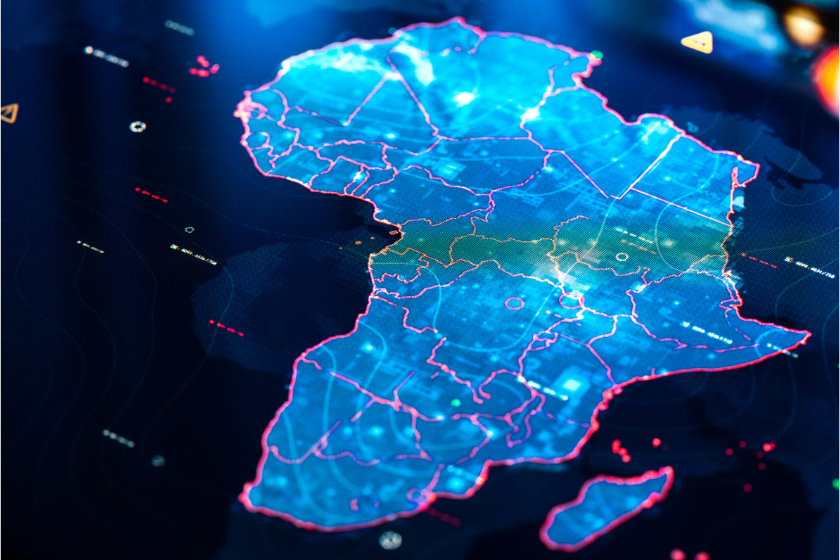
Introduction to Africa’s ESG Moment
Over the past two decades, I have worked with organizations across Europe, North America, and emerging markets on ESG strategy, reporting, and sustainable investment. One pattern has remained consistent: ESG maturity follows capital flows, regulatory pressure, and infrastructure readiness.
Africa is now entering that equation, but in a fundamentally different way.
Unlike Europe, where ESG evolved through regulation, or the U.S., where ESG grew through investor pressure, Africa’s ESG story is being shaped by necessity. Energy access, climate resilience, and economic inclusion are not abstract ESG themes. They are immediate priorities.
Recent developments confirm that this shift is not theoretical.
The Green Climate Fund approved nearly $1 billion in new climate finance, with approximately 46% directed toward African projects. At the same time, the European Investment Bank committed €1.1 billion to expand renewable energy access across Sub-Saharan Africa, supporting the “Mission 300” initiative aimed at electrifying 300 million people by 2030. Meanwhile, private sector momentum is accelerating, with companies like TotalEnergies expanding renewable portfolios in Africa, including hydropower investments in Uganda.
These are not isolated announcements. They signal a structural repositioning of Africa within the global ESG landscape.
Yet, the key question remains: does this momentum make Africa the next ESG frontier, or simply the next ESG promise?
Benefits of Africa’s ESG Rise
Africa’s ESG potential stands out for one critical reason: it connects sustainability directly with economic development.
In Europe, ESG often revolves around disclosure frameworks such as CSRD and taxonomy alignment. In Africa, ESG translates into real-economy transformation. Electrification enables industrial growth. Renewable energy reduces dependency on volatile fossil imports. Climate adaptation protects food systems and livelihoods.
This creates three distinct advantages.
First, Africa offers measurable impact at scale. Projects linked to energy access, infrastructure, and resilience produce tangible social and economic outcomes, making ESG less about reporting and more about execution.
Second, the continent holds significant untapped renewable potential. According to the International Energy Agency, Africa has some of the world’s best solar resources, yet accounts for only a small share of global installed solar capacity.
Third, global capital is starting to align with these opportunities. Climate finance institutions, development banks, and increasingly private investors are redirecting funds toward African markets. UNCTAD reports that foreign direct investment into Africa rose sharply to $97 billion in 2024, signaling renewed investor confidence.
Practical Steps and the Future Map
Looking ahead, Africa’s ESG trajectory will depend on how effectively five structural pillars evolve.
The first is energy infrastructure. Without reliable and affordable electricity, ESG ambitions cannot scale. Initiatives like Mission 300 highlight the urgency, but delivery will depend on grid expansion, decentralized energy systems, and regulatory stability.
The second is climate adaptation. Africa contributes minimally to global emissions yet faces disproportionate climate risks. According to UNEP’s Adaptation Gap Report, financing for adaptation remains significantly below required levels.
The third is blended finance. Public capital alone cannot meet Africa’s investment needs. OECD analysis highlights the need to scale private investment and develop innovative financing mechanisms to close the climate investment gap.
The fourth is capital market development. Africa’s financial markets remain underdeveloped compared to global peers. Sustainable finance instruments such as green bonds are still emerging across the continent, limiting local funding capacity.
The fifth is governance. ESG cannot scale without institutional trust. Regulatory clarity, transparency, and anti-corruption frameworks will determine whether Africa attracts sustained ESG investment or short-term capital inflows.
Common Mistakes to Avoid
A recurring mistake I observe is treating Africa as a homogeneous ESG market. In reality, there are significant differences between North Africa, Sub-Saharan Africa, and individual countries in terms of policy, infrastructure, and investment readiness.
Another common pitfall is applying European ESG frameworks without adaptation. Africa requires a more pragmatic, development-driven ESG approach that prioritizes outcomes over compliance.
Finally, there is a tendency to overestimate short-term progress. While capital commitments are increasing, execution capacity remains uneven.
Africa vs. Other ESG Regions
To understand whether Africa is truly the next ESG frontier, comparison is essential.
Europe remains the global leader in ESG regulation, driven by frameworks such as CSRD and the EU Taxonomy. However, growth potential is relatively mature, and the focus has shifted toward compliance and standardization.
The United States continues to lead in ESG investment innovation, but political fragmentation creates uncertainty around long-term regulatory direction.
Asia presents strong ESG growth, particularly in China and Southeast Asia, but faces challenges related to governance transparency and coal dependency.
Africa, by contrast, combines high growth potential with low baseline infrastructure. This creates a unique positioning. Unlike mature markets, Africa has the opportunity to build sustainable systems from the ground up, avoiding legacy inefficiencies.
However, this advantage also comes with higher execution risk.
The Pros and Cons
The case for Africa as an ESG frontier is compelling.
The continent offers strong demographic growth, significant renewable resources, increasing international capital flows, and a clear link between ESG and economic development. It represents one of the few regions where sustainability investments can deliver both impact and growth.
At the same time, challenges remain substantial.
Financing gaps are still wide. Infrastructure development is uneven. Governance varies significantly across countries. According to the IEA, energy investment remains concentrated in a few regions, highlighting disparities across the continent.
These factors create a complex investment environment that requires careful navigation.
Conclusion: Frontier or Turning Point?
Africa is not simply the next ESG trend. It is a turning point for how ESG is defined globally.
In my view, Africa will not replicate the ESG models of Europe or North America. Instead, it will shape a more integrated version of ESG, where environmental goals, social impact, and economic growth are inseparable.
The opportunity is clear. The capital is starting to move. The strategic importance is undeniable.
What remains uncertain is execution.
If governments, investors, and institutions align around delivery, Africa will become the most important ESG growth story of the next decade.
If not, it risks becoming another cycle of overpromised sustainability narratives.
The difference will not be ambition. It will be implementation.
FAQs
What is Africa ESG in simple terms?
Africa ESG refers to how sustainability principles apply to African economies, focusing on energy access, climate resilience, responsible investment, and inclusive growth.
How does Africa compare to other ESG regions?
Africa differs from Europe and the U.S. by focusing more on development and infrastructure rather than regulation and disclosure. It offers higher growth potential but also higher risk.
Is Africa ESG worth it for career growth?
Yes. Professionals with expertise in climate finance, energy transition, and emerging market ESG strategies will be increasingly valuable as investment flows into Africa expand.








 English
  Greek
Greek