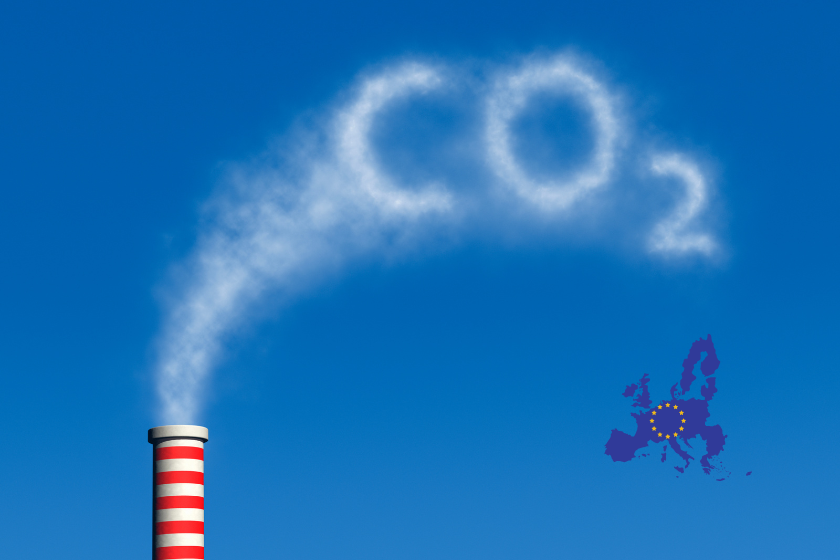
Introduction to the EU Carbon Removal Certification Framework (CRCF)
The European Union’s Carbon Removal Certification Framework (CRCF) is one of the most consequential structural reforms in voluntary carbon markets in the past decade. Formally adopted to establish EU-wide rules for certifying high-quality carbon removals, the CRCF creates a standardized definition of what constitutes credible, measurable, and durable carbon removal.
For years, carbon removals operated in a fragmented environment. Standards varied across registries. Durability claims ranged from a few years to several centuries. Additionally, methodologies lacked harmonization. As ESG scrutiny intensified and greenwashing enforcement strengthened across the EU, this inconsistency created significant regulatory and reputational risks for companies relying on removals to support their net-zero strategies.
The CRCF directly addresses this gap.
Under the framework, certified removals must satisfy four core criteria:
- Quantification – Removals must be calculated using robust, science-based methodologies.
- Additionality – The activity must go beyond what would have occurred under business-as-usual conditions.
- Long-term storage – Carbon must be stored for a defined and verifiable duration, with durability requirements depending on the method.
- Sustainability – Activities must avoid significant harm to biodiversity, water systems, and broader environmental objectives.
The framework also mandates rigorous monitoring, reporting, and verification (MRV), aligned with EU climate law and the European Green Deal.
Importantly, the CRCF distinguishes between:
- Permanent removals (e.g., Direct Air Carbon Capture and Storage (DACCS), Bioenergy with Carbon Capture and Storage (BECCS), mineralization), which aim for multi-decade to geological storage.
- Temporary storage (e.g., certain nature-based solutions), where carbon may be reversible and must include risk mitigation mechanisms.
Although voluntary, the CRCF is expected to shape both EU and global carbon markets by setting a quality benchmark that regulators, investors, and civil society can reference when evaluating corporate climate claims.
Why This Matters for Corporate ESG Strategy
Policy frameworks matter only if they influence capital allocation and governance behavior. That shift is already visible.
For example, Zurich Insurance recently entered into a structured agreement securing 1,200 tons of permanent carbon removal. Rather than purchasing generic offset credits, Zurich focused on durable removals with transparent accounting mechanisms. This reflects the direction the CRCF is formalizing.
From a governance standpoint, three structural shifts are now evident.
- Durability Is Becoming the Credibility Standard
Short-term or reversible storage solutions face increasing scrutiny. The CRCF elevates long-term carbon storage as the benchmark for environmental integrity. Investors are beginning to differentiate sharply between 10-year storage claims and geological sequestration.
In board-level discussions I have participated in, durability is now treated as a financial risk variable, not just a sustainability metric.
- Additionality and Measurability Are Non-Negotiable
The CRCF requires clear evidence that the removal activity would not have occurred without the carbon finance mechanism. Weak additionality claims are increasingly vulnerable to regulatory challenge under EU greenwashing enforcement rules.
This has direct implications for sustainability reporting under:
- CSRD (Corporate Sustainability Reporting Directive)
- European Sustainability Reporting Standards (ESRS)
- Emerging ISSB climate disclosure frameworks
Executives must assume that removal claims will be audited with the same rigor as financial disclosures.
- Removals Do Not Replace Emissions Reductions
The EU consistently reiterates the mitigation hierarchy:
Reduce first. Remove residual emissions second.
This distinction is critical. Overreliance on removals as a compensatory shortcut exposes companies to transition risk, litigation risk, and reputational damage.
Carbon markets are entering a maturation phase where quality outweighs volume.
Technical Depth: Understanding Removal Pathways
To align with CRCF expectations, ESG leaders should understand the major removal categories:
- Engineered removals
- Direct Air Capture with Storage (DACCS)
- BECCS
- Enhanced weathering / mineralization
- Biochar with stable soil sequestration
- Nature-based removals
- Afforestation and reforestation
- Soil carbon sequestration
- Wetland restoration
Engineered solutions typically offer higher permanence but at higher cost. Nature-based solutions provide co-benefits (biodiversity, water resilience) but require stronger permanence risk management.
The CRCF does not eliminate nature-based solutions; it forces transparency about durability assumptions and reversal risk.
Practical Steps for ESG Leaders
For sustainability executives, this is a strategic inflection point.
Step 1: Conduct a Removal Integrity Audit
Review your current carbon credits and categorize them by:
- Permanence horizon
- Methodology type
- Registry and verification standard
- Reversal risk provisions
Many organizations discover internal inconsistencies at this stage.
Step 2: Align Voluntarily with CRCF Criteria
Even non-EU companies should treat CRCF as a de facto global benchmark. European regulatory standards often influence investor expectations globally.
Early alignment reduces:
- Regulatory transition risk
- Disclosure risk
- Accusations of greenwashing
Step 3: Integrate Removals into Enterprise Risk Management
Carbon removal contracts involve:
- Technology risk
- Counterparty risk
- Policy risk
- Delivery risk
These risks should be governed transparently and disclosed clearly under CSRD and other reporting frameworks.
Common Strategic Mistakes
Mistake 1: Using removals as a reputational shortcut.
Under strengthened EU enforcement against misleading environmental claims, vague “carbon neutral” messaging without methodological transparency creates regulatory exposure.
Mistake 2: Ignoring durability distinctions.
A 20-year storage claim is materially different from geological sequestration. Investors understand this difference.
Mistake 3: Poor disclosure practices.
Investors increasingly expect:
- Volume retired
- Methodology type
- Storage duration
- Verification body
- Reversal risk mechanisms
Vague neutrality statements are unlikely to withstand scrutiny.
FAQs
What is the EU Carbon Removal Certification Framework in simple terms?
It is an EU regulatory framework that defines strict criteria for measuring, verifying, and certifying high-quality carbon removals with defined durability and sustainability safeguards.
Is the CRCF mandatory?
Currently, certification under the CRCF is voluntary. However, it is embedded within broader EU climate policy and is likely to influence future compliance mechanisms and reporting obligations.
Why does this matter for ESG professionals?
As standards tighten and carbon markets evolve, expertise in durability criteria, MRV systems, and regulatory alignment will become a differentiating skill set in sustainability leadership roles.
Final Thoughts
The EU Carbon Removal Certification Framework is more than a technical instrument. It functions as a credibility filter for net zero claims.
Leading companies are adapting accordingly, prioritizing durable removals, transparent accounting, and governance integration. The direction is unmistakable: carbon markets are moving from experimentation to accountability.
For ESG leaders, the question is no longer whether to engage with carbon removals. It is whether those removals can withstand regulatory scrutiny, investor due diligence, and long-term climate integrity standards.
In the next phase of ESG evolution, integrity will be measured not by ambition statements, but by methodological rigor.








 English
  Greek
Greek